Sorry this has taken so long, several months, but life has intruded. Deaths, loss of loved ones, waiting for the loss of loved ones. Hard.
But I've finished the first draft of Jasper's Lament, London 1664, a story of a young erudite of religious theory during a time when there is little tolerance for it. The story opens when Jasper's father dies under strange circumstances. During the course of the year, he finds his father has been involved in plots against the king. His uncle is of a perverted religion; his mother converses with his dead father, who resides in a corner of the common room. Jasper falls in love with the daughter of a Dutchman, who is in England illegally, for soon England will go to war with that dead flat country.
And during all this, Jasper takes his place as full partner in a London shop. Rumor and warmonger gossip in an understated tone. Good stuff.
Showing posts with label History London. Show all posts
Showing posts with label History London. Show all posts
Tuesday, May 12, 2015


Wednesday, November 5, 2014
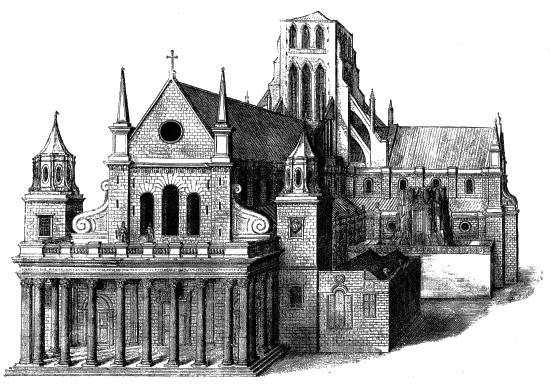
Old St. Paul's
When I find historical texts published in the middle of the 17th century I feel I’ve won the lottery. Even though most authors of this time-frame write flowery 'epistles', or a long convoluted 'introduction to the reader', interspersed with Latin or other languages (Greek comes to mind) which I cannot read, once I finally get into the heart of the book, it yields great information.
 |
| St Paul's in the early years |
Lately, I've run into historical texts about the physical
condition of London’s old St Paul's Cathedral. The information is very
interesting in that the old fellow lived a full life. The great church could
have regaled us with stories from the blessed to the morbid. When the cathedral
finally met his demise, he went down in a blazing coat of fury.
Surprisingly, for a good while it was a crumbling piece
of rubbish, both structurally and spiritually. After reading, I really wonder if
Godly services ever took place in the building.
In 1658 William Dugdale published The History of St Paul’s Cathedral, and dedicated it to The
Right Honourable Christopher Lord Hatton, Comptroller for the Household to the
late King Charles (the first), and one of his majesties most honourable Privy Council.
Mind you, this was during the Interregnum when Cromwell was in power. A year prior, no one would have attempted to do dedicate a book to a Royalist,
but by this time, the underpinning of the Commonwealth was already weakening,
as was the Puritan leader's health. Cromwell died in September of this same year,
a catalyst to restore the Royal Stuarts. Times were definitely a' changing.
A short history: The cathedral build began in 1087 and
took 200 years to finish. In 1255 part of the church was lengthened, which
swallowed up St Faith, a nearby parish church. The parishioners were given
space in Paul's crypt (called St Faith under St Paul’s) where booksellers and
their families worshiped. Toward the end of Paul’s life, as a safety
precaution, St Faith was used as storage space for their books/papers/printing
presses.
 |
| St Paul's after the 1561 fire |
In 1561 lightning struck St Paul’s spire where it caught
fire and fell through the roof of the nave. The fire melted the cathedral
bells, and lead covering the spire melted off the roof like molten lava. Queen
Elizabeth sent letters to the Lord Mayor, pleading for a quick repair to the
roof. She donated from her own purse 1000 marks, and lumber from her
woodlands. Almost 7,000l were
allocated. Within a month of the fire, they began to rebuild the roof, hastily
covering the wood with lead. The spire was never replaced, the reconstruction of
the roof poorly done, yet this still took 5 years to complete.
As a result, St Paul's continued in ill-health for the
next 60 years. Inigo Jones was given the task to refurbish the great, moldering
cathedral while under King James I, but squabbles broke out regarding the
architectural style, and money became scarce. Nothing happened for another 8
years. Then King James died.
Under Charles I, reconstruction was again attempted. This
time, all donated monies were to be recorded, with instructions on what to do
if a donor died without a will. The committee to rebuild the Cathedral would still
get their money. Contributions flowed into London. The renovations became one
of national pride. Over 10,000l had been gathered. By the end of 1632,
repairs began. By the end of 1639 almost 90,000l had been collected.
Houses around Paul's were demolished to make room for the reconstruction. Money
was handed out to those who lost their homes; donations continued to flow in,
sums were divvied for the repairs, then in 1641, everything came to an abrupt
halt.
Civil wars engulfed the country; King Charles was at war
with his own people. Parliament men, and their followers, defaced churches,
including St. Paul's. The cavalry stabled their horses in the church, pulled
down Paul's cross, and other crosses around the city and country. King Charles
I was executed, and Oliver Cromwell moved into Whitehall Palace.
During the Puritan era, in Dean Milman's words, '...St.
Paul's became a useless pile... The portico was let for mean shops... The body
of the Church became a cavalry barrack.' The roof began to leak.
 |
| Paul's Walk as Wenceslaus Hollar would have it. |
Then there was Paul's Walk.
As far back as the 14th century, abuses abounded in St
Paul's, which seemed no one had enough power to stop. The nave extended the length of the Cathedral. It was long and vaulted, open to
the public during all hours of the day and night. It became a sheltered
shortcut across the churchyard, a meeting place for all and sundry, a
marketplace of sorts. Young men threw stones at birds that nested there; some
hurled arrows from crossbows, breaking statues and windows. Servants out of work
gathered at a pillar to make themselves known they were for hire. Fights and
brawls further sent the Cathedral into decline. The authorities tried to stop
these transgressions through excommunicates and whatnots. By the 17th century,
the governments were in disarray, and the abuse continued. St Paul’s nave
remained a place of London's underbelly, especially at night.
Charles II returned to England in a blaze of joy and
celebration May 1660. In 1663, a scaffold was built around St Paul's, money
collected, and more houses designated to be pulled down in order to make room
for the rebuild. Architectural design was again argued. A committee of
commissioners had a meeting on August 25, 1666. The repairs would be extensive
from the old foundation to the pillars up to the roof. The steeple still had
not been replaced from the 1561 fire, and a new one fell into the discussions.
But before anything could be done, a fierce wind blew,
and in the early hours of September 2nd, 1666 a fire started in a bakery on
Pudding Lane. Flames blew with the winds and spread at a rapid rate, burning almost
everything within the old London walls. St Paul's, too.
The scaffolding and other demolition around Paul's
hampered any fight to save the old building. Its disrepair only fueled the
fire. St Faith's under Paul's was loaded with combustive goods that exploded,
sending Paul’s choir into St Faith. The lead surface of the roof began to
melt in folds and rained down the sides of the church, into the streets. Within
hours the great Cathedral was a cavernous loss.
 |
| St Paul's after the fire of 1666 |
I guess all good things must pass. St Paul’s lasted for
centuries, mostly in some sort of disrepair. Sad, really.
Many thanks to:
Dugdale, William. The History of St Pauls Cathedral in
London from its Foundation until these Times: Extracted out of Originall
Charters. Records. Leiger Books, and other Manuscripts. Beautified with sundry
Prospects of the Church, Figures of Tombes, and Monument. London 1658.
Longman, William (F.S.A). A
History of The Three Cathedrals, dedicated to St. Paul in London. London
1873
Simpson, W. Sparrow (D.D.,
F.S.A). Chapters in the History of Old S. Paul’s. London 1910.
You can find my novels here: http://www.amazon.com/Katherine-Pym/e/B004GILIAS
Friday, April 18, 2014
Meet My Main Character
I’ve been tagged by Linda Root & Anita Seymour Davison to tell you
about the main character in one of my writing projects, but I really can't do
that. I finished The Barbers, and my WIP is now just
being born. Instead, I'll tell you a little of my 'Plan'...
Back in the day (a Texas colloquialism great grandparents used) I found
Samuel Pepys. Upon reading his journal I realized it was a discussion of local
mores, slang, and his life saturated in current events that were so minute, so abbreviated, I
couldn't make heads nor tails of it. My understanding of the mid-17th century
was nil, and what Mr Pepys wrote in his journal felt like jumping into a whirling chasm
filled with bits and bobs only the locals of the time understood.
So, I had to learn of what his journals said, i.e., the life of one living
in the 17th century who'd endured the English Civil Wars, and the Restoration,
the 1st & 2nd Anglo/Dutch Wars, the death of King Charles II and subsequent
exile of James II, then of course, the insane Titus Oates escapade.
I studied London City and its Liberties. I packed my library with all sorts of
historical texts filled with random pieces of information my heirs will most likely
give to used book stores, or the Goodwill. I mean, not many care about the
history of beds or shoes and Livery Companies, the microscope Robert Hooke had
made, or that he felt veins and capillaries meant something important.
For The Barbers I found lovely 17th century published texts that helped my story roll along the foggy lanes of London, on medicine and science, even an experiment on a dog. It was soooo exciting.
For The Barbers I found lovely 17th century published texts that helped my story roll along the foggy lanes of London, on medicine and science, even an experiment on a dog. It was soooo exciting.
My Plan, therefore, is to write of the volatile 1660 decade until London
burns to the ground. Each novel will take place in London during one year due
to the amazing amount of current events. So far, I’ve managed to write the
years 1660-1663.
My birthing project (Chapter 1 is always painful) is of London 1664. That manuscript has yet to take on a personality of its own. In the interim I’ll tell you of The Barbers, and my protagonist, how she deals with life in general.
My birthing project (Chapter 1 is always painful) is of London 1664. That manuscript has yet to take on a personality of its own. In the interim I’ll tell you of The Barbers, and my protagonist, how she deals with life in general.
What is the name of your character? Is he/or she fictional or a historic
person?
My character's name is Celia Barber, a fictional person. She apprenticed as
a barber under her father, and enters the guild (Barber-Surgeons), but as a
woman she will never be licensed. (There are some documented cases of women holding licenses outside the 7 mile radius of London, but not within the city proper.) Celia shares a shop with her father who snips hair & shaves chins, while she heals. It is against the guild to be a barber and do the work of a surgeon or physican. King Henry VIII separated the barber/surgeon job functions, which weren't often adhered to, but I digress.
When and where is the story set?
The story is set in London 1663.
What should we know about him/her?
Celia Barber is very interested in science and medicine, and she chafes at
the restrictions set against women.
As religious strife settles down, the great brains of England begin to
explore medicine and science. Celia strives to see a dissection in the Hall of
Surgeons, and an experiment in the Royal Society, but her dreams far outreach
reality.
Celia's sister works at the Palace of Whitehall and introduces her to
Viscount Deeping, who takes an immediate 'shine' to Celia. He enjoys her quest
for knowledge, her dreams to see an experiment at the Royal Society. He takes
her there as his lackey where Celia is thrilled to meet Robert Hooke,
who created so many tools for the scientist, and wrote theses for the
physician.
What is the main conflict? What messes up his or her life?
Her mother is narcissistic, and as a toddler ignores Celia. Finally, when
she is about three or four, her mother casts Celia to the streets with a
pronounced slam of the door. Her father rescues her, but the rejection takes its
toll. Celia never trusts anyone; she'd rather keep to the shadows with her thoughts and
dreams, which were many, but life intervenes. She loses one brother, than another, and she can't save them.
What is the personal goal of the character?
To heal people the best she can with local herbs and the latest science,
but her goal is sidetracked when her impudent sister sees an inkling of treasure, and the intrusive viscount.
Is there a working title for this novel? And can we read more about it?
The title is set in cement, and the work
published. The Barbers, a Tale Most
Curious & Rare.
When can we expect the book to be published?
It’s on the cyber shelves as we speak, paperback and ebook, on amazon, almost all countries.
Many thanks to Linda and Anita for inviting me on this trip of how my
historical fiction develops of itself (after tons of research, that is).
Please click on the links below for The Barbers
USA
UK
Please click on the links below for The Barbers
USA
UK
For my other novels, see amazon: http://www.amazon.com/Katherine-Pym/e/B004GILIAS
Thursday, February 6, 2014
Barber-Surgeons Guild
Well, my story of The Barbers has published, and
dedicated to my good friends across the pond, Jim & Sue Barber. I figured
Jim's ancestors were barbers, and that my friends would like to know what their
forefathers did for a living, but first, I needed to do a bit of research. I
wanted factual data without it being textbook, but had no idea the amount of
research it would take, or how unbelievable the health practices were at the
time.
In order for the reader to accept some of what I wrote, I included an example of my resources at the end of it under the heading: Afterward. I reckoned no one would believe me otherwise. Most of the texts were published in the 17th century, which is apropos due to the fact The Barbers takes place in 1663. Only two sources were published after 1663, one in 1667 and one in 1904 around which this blog is centered.
Now, for a bit of history…
 |
| King Henry VIII & the Company of Barber-Surgeons 1540 |
In the old days, prior to King Henry VIII,
barbers/surgeons shared job descriptions. They both sheared hair, made wigs,
shaved faces, trimmed beards, bled, cleaned wounds, and healed the sick. The
guild was then known as the Barber’s Company.
In 1540, King Henry changed it to the Company of
Barber-Surgeons, and new rules applied. Barbers could only barber and pull
teeth, while surgeons did everything else, but these laws were not often
followed. Barbers continued to ply their surgical skills, and surgeons snipped
mustachios and hair. It filled their coffers with extra money.
In Early Modern England records indicate a few women
barbered and did ‘pyhsik’ (doctoring). These women where allowed into the guild
through their fathers or a male relative to apprentice and subsequently go into
trade. They could do almost everything a male surgeon could, except see a male
dissection, which would cause their womanly desires to flare. They could not witness
a female dissection either. This would expose the men digging about in a female’s
lower anatomy, trying control a woman’s breeding.
Women became barbers or surgeons, but rarely, if
ever, could they be licensed. There is reference to a couple of women licensed
to ply their surgical skills, but she could only practice seven miles outside
the City limits. (Seven miles outside London seems important, for open Roman
Catholicism was included in this distance limit.)
Female barbers were more accepted in the 17th
century, their hands considered calm under pressure. They could shave a man
very nicely whilst in a coach rumbling along a cobbled lane.
 | |
| Pulling teeth |
Barbers had long days. During the reign of Henry
VI, an edict was cast down that “’…no barber open his shop to shave any man
from 10 o’clock at night from Easter to Michaelmas, or 9 o’clock from
Michaelmas to Easter, except it be any stranger or any worthy man of the town
that hath need (what? Isn’t this contradictory, or does it apply to the less
wealthy?): whoever doeth to the contrary to pay one thousand tiles to the
Guildhall.’”
Early barbershops had red rags lining their
windows, to show they could let blood, and inside rotten teeth were strung on a
string. This meant the barber could shave, draw teeth, and “breath’d a vein”
(bleed someone). In the 17th century, while customers waited for his
barber’s expertise, he strummed a gittern (early guitar).
There were certain things a potential customer
could not say or do while in the barbershop, or he’d be forced to pay a forfeit.
Examples of offences: a customer handling a razor or fiddling with the barber’s
tools, speak of cutting throats, or call hair-powder flour.
 |
| Barbershop |
Here’s a story re: barber-surgeons.
A duke entered a small barbershop to find the
barber not in. He regarded the young apprentice and said, "Can you shave
without cutting?" The apprentice said, "Aye," and the duke sat
in the chair. After a few pleasantries, the duke patted his brace of pistols
and said, "Of course, if you cut me, I shall shoot you dead." The
youth thought a moment, then nodded. "I'm not afraid, sir." In quick
strokes the lad pleased the duke by shaving him very well. The duke stroked his
clean jaw. "Why were you not afraid, then?" With a shrug, the lad
answered, "Before you could draw your pistol, I would cut your
throat."
Ha! Well said.
For more reading on the barber/surgeons, please
see my new release, The Barbers, now
on amazon worldwide. Not very expensive, either.
~~~~~~
I want to thank the following for the quotes and
information found in this blog: Andrews, William. At the sign of the
barber's pole, Studies in Hirsute History. Cottingham, Yorkshire J.R. Tutin
1904
Saturday, January 4, 2014
The Barbers
Well, I've finished my 4th installment of stories in the decade of 1660's, The Barbers, a novel of science, medicine, and superstition in 1663. It was a long and arduous process, especially since, during this writing adventure, we drove across country and built a house on a pretty piece of property we own. That, with the heat of Texas, living in a new town so we could be near the build process, in a teeny condo where you had to go through the bedroom to reach the bathroom, I researched, wrote, deleted, re-wrote, and edited a novel of almost 95,000 words. (sigh - as beads of sweat pop on my forehead)
In a previous blog on another blogspot, I tickled the reader with my at the time work in progress. I spoke of research and how it affected the story. I would have loved to use Margaret Cavendish, Duchess of Newcastle. She is considered the first to have written science-fiction with her novel, The Description of a New World, Called The Blazing World where her heroine is kidnapped from a beach by an admirer, and put aboard ship. The ship blows off course and jettisons to the arctic where all the men die. (Hmm, did she dislike men?) One would think the ship careening through time and space would be the start of science-fiction, but no. The ship continues through a crack in the ether to a new dimension, which is where the science-fiction truly begins. You can still find this novel on amazon.
This book was not published until 1668, and my work is written within the confines of 1663. Margaret was also the only woman to be allowed to visit the Royal Society. If I could have, Celia (my heroine) would have palled around with her, and gone to the Society for a lecture or see an experiment. As it is, I have Celia dressed as a lacky, who accompanies a viscount, to see an experiment regarding the blood/oxygen flow through the heart and lungs of a dog. This experiment actually took place, and is documented in The History of the Royal Society published in 1667. I admit to fudging a bit here, but to compile and publish a good size tome takes time. The experiment did not document a date, so I decided the experiment on the dog could have taken place in 1663.
Research was the biggest part of the process, but it always yields good things. Whoever said reality is better than fiction was correct. Little tidbits of information lead to more detail, and in reality (ha, pun intended), it can make a good story.
For instance, I ended up having to hang someone in The Barbers. This started with a comment re: a silken halter for a quicker kill instead of hemp rope, and could be used by a man or woman of wealth. This led to the study of the justice system in Early Modern England. Did you know someone convicted of murder did not have a proper defense? No lawyers entered the courtroom during a murder trial unless they were in the gallery - watching. The guilty party was forced to show innocence, and the witnesses or the victims had to show the culprit's guilt. It made the courtroom a free-for-all. Then, of course, hanging was jolly fun where a great portion of the local populace watched while they drank and ate, and cheered those on the hanging tree, dancing the Tyburn Jig.
Are we not a blood thirsty species?
There was a great deal of superstition and astrology linked to doctoring, so that took a good bit of study. The Barbers-Surgeons Guild changed policies during the reign of King Henry VIII, but by the mid 17th century, wherein barbers could not heal, and surgeons could not barber, it was not too keenly heeded. Of course, a barber did not broadcast before the guild he healed, or that a surgeon snipped hair and mustachios to supplement their income. Women could apprentice to become barbers or surgeons, but they were never allowed a license to practice in the city. Women were well known to have a steady hand to the point a gentleman bragged on a woman who barbered him very well while in a coach, trundling down the lane, but I'll talk more on that next time.
If you are interested in my other works, please see: http://www.amazon.com/Katherine-Pym/e/B004GILIAS
In a previous blog on another blogspot, I tickled the reader with my at the time work in progress. I spoke of research and how it affected the story. I would have loved to use Margaret Cavendish, Duchess of Newcastle. She is considered the first to have written science-fiction with her novel, The Description of a New World, Called The Blazing World where her heroine is kidnapped from a beach by an admirer, and put aboard ship. The ship blows off course and jettisons to the arctic where all the men die. (Hmm, did she dislike men?) One would think the ship careening through time and space would be the start of science-fiction, but no. The ship continues through a crack in the ether to a new dimension, which is where the science-fiction truly begins. You can still find this novel on amazon.
 | |
| Early Edition |

This book was not published until 1668, and my work is written within the confines of 1663. Margaret was also the only woman to be allowed to visit the Royal Society. If I could have, Celia (my heroine) would have palled around with her, and gone to the Society for a lecture or see an experiment. As it is, I have Celia dressed as a lacky, who accompanies a viscount, to see an experiment regarding the blood/oxygen flow through the heart and lungs of a dog. This experiment actually took place, and is documented in The History of the Royal Society published in 1667. I admit to fudging a bit here, but to compile and publish a good size tome takes time. The experiment did not document a date, so I decided the experiment on the dog could have taken place in 1663.
Research was the biggest part of the process, but it always yields good things. Whoever said reality is better than fiction was correct. Little tidbits of information lead to more detail, and in reality (ha, pun intended), it can make a good story.
For instance, I ended up having to hang someone in The Barbers. This started with a comment re: a silken halter for a quicker kill instead of hemp rope, and could be used by a man or woman of wealth. This led to the study of the justice system in Early Modern England. Did you know someone convicted of murder did not have a proper defense? No lawyers entered the courtroom during a murder trial unless they were in the gallery - watching. The guilty party was forced to show innocence, and the witnesses or the victims had to show the culprit's guilt. It made the courtroom a free-for-all. Then, of course, hanging was jolly fun where a great portion of the local populace watched while they drank and ate, and cheered those on the hanging tree, dancing the Tyburn Jig.
Are we not a blood thirsty species?
 | |
| Child fastened to womb |
If you are interested in my other works, please see: http://www.amazon.com/Katherine-Pym/e/B004GILIAS
Subscribe to:
Posts (Atom)