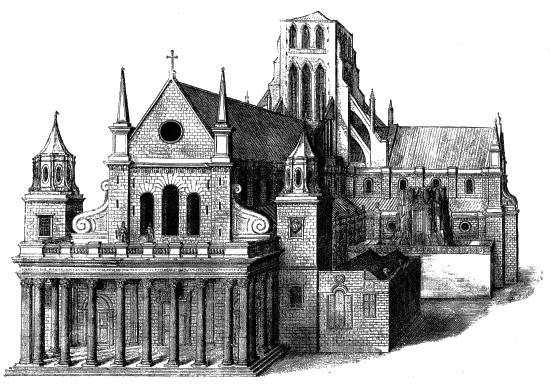
My intent is to allow the reader to walk down the lanes of old London (before it burned to the ground in the Great Fire of 1666) and feel as if you are actually there. You can smell and touch the nuances of London. You'll know what it's like to work your way through the City and its the conflicting laws where religion played in important part of everyday life. So sit back and enjoy the ride.

Oh, and then there's my French Revolution novel.

Tuesday, May 14, 2013

Guns & English Shooting (Part IV)


Hanging partridge (18th century)

This is the fourth and last installment of The Art of English Shooting by George Edie, Gent., an informative 18th century tome that helps an author or reader with background detail of antique guns, bird hunting, and which dogs to use.  

If you've missed the previous installments, just scroll down to the earlier blogs. I don't have that many, so should be easy to find. 

Keep in mind, I’ve not made any changes. Spelling and voice are as in the book. 

Page (26)

"Of various Upland Winter Shooting.

"Our common field shooting is generally best in frosty weather, and when the ground has a tolerable cover of snow. We have in most parts of England, a variety which affords very tolerable sport; the most common are, different sorts of wild pigeons, field-fares, starlings, redwings, &c.

Starlings are nasty birds, and not a meal I’d like to see on my table.

"In this diversion we use no dog; and the fewer shooters together the better.

"The several kinds of pigeons require the No. 3 shot, as being strong birds; and may be either taken on the wing, or as they perch on a tree; but the rock pigeons are best, in general, taken on the wing; however, it sometimes happens that a shot at them sitting is more proper; in this, discretion must direct. The fieldfare (thrush) is a very common bird, it seems to delight most in large close orchards; but in hard weather, in the fields; they frequent the haws bushes, and afford very pretty diversion: though they are naturally very wild, yet, when a hard frost is set in, there is no difficulty in getting within forty yards of them, at the time they are keenly engaged on their feeding bush: here they will fit forty or fifty sometimes together.

"The proper way of managing this kind of shooting is, if possible, to secrete behind a bush, or in a hedge, within shot of one of the bushes they frequent: when a sufficient number (as the person may judge) are together, to fire at them as they see fit; what are killed should be taken up, and the shooter replace himself as before: in a quarter of an hour, or less, more will probably be on the bush; and he may often go on shooting in the same place, all the while they are on their feed, which is from a little after sun-rise till eleven or twelve o'clock; and in the afternoon they go on again, about an hour before sunset; but such sport as this must be expected only where fieldfares are in great plenty.

"Starlings afford tolerable diversion in shooting; in winter they, for the most part, go in flocks from twenty to fifty; they delight chiefly to be in moist pastures among cattle, and sometimes sit so close together on the ground, that a person may kill twenty-five or thirty at a shot; taking these on the ground, or wing, may be left at the discretion of the shooter; but the wing will be best preferred: what are shot, should have their heads immediately pulled off, which by their bleeding, prevents a bitterness of taste they would otherwise have: use for these and fieldfares the No. 4 shot.

A murder mystery could be in the works while pulling off the heads of those dead starlings…

"In shooting larks in flocks, use the No. 5 shot; and make it a rule always to take them on the wing: here it will be adviseable to have the gun scatter more than common; in order to do this, put in an equal quantity of powder and shot, supposing the usual charge to be three parts shot to two of powder; but if the gun, in common, carries an equal quantity of each, then it will be necessary to put in only about three parts of shot to four of powder: and in shooting any of the smaller birds in flocks, this rule of charging should be observed. 

17th Century
"Necessary Observations for the young Sportsman.

I can see a hero and heroine doing the following at the darkest part of dawn:

"The sportsman should make it a general rule to turn out with or before the sun; the morning is the best time for all sorts of shooting: he should be provided with a spare flint or two, and a strong pocket knife that will serve, on occasion, the purpose of a turnscrew; he should take out the best powder that can be got, and that sized shot which suits the sport he pursues.

"When we come to the place where we turn out, if dogs are used, we put them on the hunt by whistling or hying on (as the term is): it is necessary to observe the motions of spaniels, for there are but few but what will give some intimation when they come on scent; use them to come in at a sharp call, and never suffer them to run after a bird, except it is wounded: oberve [observe] to let the dogs, whether spaniels or pointers, have the wind as much as possible (that is, let them hunt against the wind).

"In using pointers when they are perceived drawing on a point, and are known to be not quite staunch, call to them to take heed, and if they spring without standing, correct them slightly with a switch, or small stick, or better a pocket dog-whip, speaking angrily to them, and keep them at a distance the remaining part of the day, but not so much as make them sulkey; however, if their after behaviour deserves encouragement, it may not be improper to take them into favour.

"Observe after a fire never to blow through the barrel, but charge again immediately, while the inside of the barrel is hot and dry; by this method of immediate charging, a gun seldom hangs fire, and carries much smarter and better; there is no occasion to wipe either pan or flint while out (if the flint is good, which, by the bye, it always should be); but on returning home, wipe clean with tow (Definition of tow is in the first installment), or linen rags, both out and inside of the barrel, and also the lock from the soil of the powder; when it is thus cleaned, hang it up, and if it can be so ordered, where a constant winter fire is kept, hanging it at a moderate distance from the fire: the powder flask should also be kept in the same degree of warmth in winter time; if the gun has received any rain or wet let it be wiped thoroughly dry, and stand some time near a fire, to dry any remaining damp, and have a little oil rubbed over it before hanging up.

While the hero cleans the gun, and sets it near a fire to further dry, I see our heroine off to the kitchen for a nice cup of tea, don’t you?

"Lastly, it may be observed, if a gun is brought home loaded, if it is not very foul, it may remain four or five days fit for use, but never should longer, as it will be apt to hang fire; and even if it remains but one night loaded, the touch-hole should be cleared with a pin, and fresh primed: but it is a good custom with many never to suffer a gun to be hung up charged, but on returning home to draw the shot and fire off the powder, by which, they not only prevent some degree of hanging fire, but also are clear of any accident happening by unwary or ignorant meddlers, of which we have had many fatal instances.

"F I N I S."

So concludes our very interesting study for maintenance and uses of antique guns. If you liked this but do not want to copy and paste and store in your ‘research data’ file for further use in one of your novels, you can find this as a free download from google books, epub or pdf. Google: The Art of English Shooting by George Edie, or follow this link: 

http://books.google.com/books?id=FBBbAAAAQAAJ&printsec=frontcover&dq=The+art+of+english+shooting&hl=en&sa=X&ei=L49QUcmTC6boiAKB_IHIAg&ved=0CDgQ6AEwAA

For more delightful reading, please see the following link for my novels, the ebooks at a reduced cost.


Tuesday, April 16, 2013

Guns & English Shooting (Part III)


18th Century
This is the third installment of The Art of English Shooting by George Edie, Gent., an informative 18th century tome that helps an author or reader with background detail of antique guns and their uses.  

While writing, oftentimes subplots pop up from unknown places (subconscious or the universe), and it stops me dead. From this moment, I must ferret out the details.

As previously stated in Part I, when writing TWINS, I delved into ancient guns, black powder, and how they were used, fired, cleaned, plus definitions (how they looked, their uses) on gun parts such as flash pan and flint. This attention helps to round out the plot or subplots. It makes the reader feel s/he is there, in the scene you wrote. 

This series is to provide knowledge in the handling of guns during the 18th century, bird hunting, and what sort of bird dogs to use. It can also be used as a study of the written language during this time frame. It helps the author with authenticity.

So, here we are at the next set of instructions from a 1777 pamphlet to keep a gun in good shape, and how/when to shoot game. If you’ve missed the other installments, just scroll down to the previous blogs on this page. (I haven't that many.)

This blog will begin with “Of Wood-cock Shooting” and end with Of Water-fowl and Fen-Shooting”. So very interesting.

Now, to continue… Oh, and don’t forget, this is verbatim from the book. I have not made any corrections to punctuation or spelling.

Page (20)

"Of Woodcock-Shooting.

"The season for Cock-shooting, generally begins towards the latter end of November; they are birds of passage, and come over to us in flights in the night-time, about the full of the moon: the first flight, which is sometimes in October, is commonly very scanty; but they continue coming over, more or less, every moon, till February; consequently, it will generally be found they are in greater plenty towards the latter end of the winter; though this is no absolute rule... they remain with us generally till the middle or latter end of March.

See? You can insert a hunting party in your manuscript as a sure thing during the months of December and February. Any time before or after, a true sportsman reading your novel might get annoyed due to the scanty gathering of woodcocks in his neck of the woods. The last thing an author wants is a bad review simply because you’ve entered months wherein woodcocks may not be available for the hunt.

"Their haunts are chiefly in the springs and bogs, in woods and coppices; and in the beginning of the winter, before the leaves are well off, they prefer the out-parts of the woods.

"For springing them, we use spaniels, and a leash, or two brace, of the steady keen-nosed sort, are sufficient for two or three shooters... and, as in pheasant-shooting, it is necessary to keep as near the dogs as possible...

"A Woodcock is a very tender bird; and being a large mark, affords easy pretty shooting, where a person has got the art of shooting flying tolerable well; but it frequently occurs that the bird rises in a perpendicular line, which is the most difficult shot that is; in this case, an unexperienced sportsman will find it more adviseable to forbear firing... til the bird has arrived at the height of the perpendicular, and flies offward; but as a shot will be often lost by this delay, the good marksman should never wait it, except he judges the shot will be better.

In other words, aim your gun and fire.
17th Century

"Of Snipe-Shooting.

"The Snipe, like the woodcock, is a bird of passage; they begin coming over to us about the middle or latter end of October, and remain with us pretty forward in the spring. They frequent, like the woodcock, the springs, bogs, and marshy places; but with this difference, that the cock seeks these in cover, and snipe in open clear parts, as fields and commons.

"Snipes afford as pretty sport to a good marksman, as any bird whatsoever; tho’ they are very quick fliers, yet are every tender, and will fall almost at the bare report of the gun.

Fodder for your next chapter - very tender, quick flying snipes. What more could an author want?

"The several disagreeable circumstances met with in wood-shooting, are in this sport avoided; and a person has here no other inconvenience, than a little wet and dirt, which may be easily guarded against by wearing boots.

"We spring snipes either with spaniels, or by making a flight sharp kind of noise, about the places where we know they haunt: they mostly fly directly against the wind (if there is any material air stirring), and a shot after them is the best and most sure: the slant and cross shots are rather difficult, as they are a small mark, and fly exceedingly quick.

"For practice in this, which is very nice, swallow-shooting may be used in summer to advantage.

"Of Water-fowl and Fen-Shooting.

"The haunts of the Water-fowl, as Geese, ducks, Widgeons, &c. are well known.

"In shooting them, we use the longest killing gun, and as large shot, as the No. 1 or 2.

"The proper dog is the rough, curled, water spaniel, of which the white sort are commonly the best; they should be under the strictest command; be ready at fetching any thing out of the water, without biteing it; and catching what is only wounded; should be used, on occasion, to creep quiet, and close behind the master's heel; of such, one or two will be sufficient for this sort of shooting.

"The fowl may either be shot swimming, or, which is better, taken on the wing; as in the water they are strongly guarded by the close lying of their wings and feathers; therefore, if a person is a good marksman, it will be always best to spring them first.

"The best place to throw the shot, if opportunity will allow, is under the wing, as that is by much the tenderest place; and the worse of all is the breast, as the feathers here lie extremely thick and close. This sport, though very good, where wild-fowl are plenty, is very little practised by gentlemen, owing to the several disagreeable circumstances attending it.

"The fen-shooting is but little followed by gentlemen sportsmen, any more than wild-fowl shooting. The haunts of the fen-birds are sufficiently known by their title.

"We use, in general, the No. 3 shot, which will serve as well for the bittern, and curlew, as the plover.

"One or two steady water or land spaniels may be used; and it will be always best to spring the birds before firing.

Here ends the third installment of The Art of English Shooting.

Next time, we’ll discuss: 
Of various Upland Winter Shooting, and  
Necessary Observations for the young Sportsman.

How cool is that?

For more happy reading on London 1660’s, and one French Revolution novel, please find my works where ebook prices have been reduced at: 


Friday, April 12, 2013

Historical Novelists Book Fair


We will take a bit of a break from The Art Of English Shooting which you will see below, and then in a few day's time, above. 

In the meantime...
Welcome to the Historical Novelists Book Fair April 12-15 in this year of our Lord 2013. 

http://tgunwriter.blogspot.co.uk/2013/03/on-line-spring-book-fair-historical.html#comment-form

According to the rules of the game, I am to start with latest release, a story of espionage in London 1662. It is titled: Of Carrion Feathers. But to get a better picture of my plan, let's begin with why I chose London during the 1660's.

My goal is to write a London novel each year from 1660-1666 when most all of the inner city burnt to the ground. The reason for a book each year is simple. The current events of those years were so extraordinary that I simply had to dedicate a book per year to explain it all.  That means I cannot speak of something in one book that happens a year later, which is sometimes difficult. Historians have a tendency to blur data as long as it's within a certain span of time.


For instance, the very end of 1659 there were whispers to bring the king back to England. When the king returned in May 1660, the churches were silent of music, but I cannot speak of music in the churches until quite awhile after the king resettled in England. Historians will say music returned to the churches with the Restoration (1660). Well, that is true, but in 1659 or in 1660 during Viola, there was no music in the churches. It took quite a while for this to happen.  But I digress...

As above, 1660 brought King Charles II back to England, and what a time that was. So many singing and dancing in the streets. The transition from Puritan to Anglicanism was extreme. Due to ever changing rules, good folk did not know if they were married or not. Many took this confusion to heart and left their spousal unit to marry again, but across town where they were not known. Viola, A Woeful Tale of Marriage is about a young woman who finds she is married to a bigamist. It's a rousing good tale. 


Then, in London 1661, we have TWINS (An EPIC 2012 Finalist) that begins with a little known superstition where a man can only sire one child at a time. If a woman has twins, especially fraternal, then it is clear to all she is an adulteress.  

But that's not the only storyline. TWINS deals with a papist (Catholic) merchant in an overwhelmingly Protestant London. If it were known our protagonists were Catholic, they'd be run out of town to the distance of at least 7 miles. It's a good conflict. 

TWINS is about trade in London during the year 1661, prior to when the East India Company got a better hold in the business. (The company did not fare well during the Civil Wars or Cromwellian years.) Our merchant - the twins' uncle - is in the Levant Company, and Edgar goes to sea as a learning experience. What he doesn't expect is to fall into a battle with pirates, or deal with a corrupt Levant official. 

Emmatha is forced to stay behind and marry a widower, and a Catholic, gentleman farmer (who has several children by his ex sister-in-law). Is this confusing? Where's the twins' father in all this? You'll have to read it to find out. 

By 1661, trade was better, and more ports of call were being explored, but it wasn't until Catherine of Braganza (1662) that England made so many more strides in that area. TWINS is another good rumpus tale that men and women alike will enjoy.


Of Carrion Feathers is London 1662 during the worst of the nonconformist uprisings, and plots are rampant against the king. With all the plots that abounded, it was a wonder King Charles II escaped this year unscathed. 

There is little written about espionage during this time, but I did find a lovely volume that detailed from the smallest to the largest plots, and the king's burgeoning spy network.  It's a Cambridge study in early modern British history, titled: Intelligence and Espionage in the Reign of Charles II, 1660-1685

There were even women in these spy groups, which added to the danger. My chief protagonist is Beatrice Short who is very bright, but not discreet. She is discovered snooping about the Undersecretary's desk, and finds ciphers. He recognizes her brilliance and blackmails Beatrice into becoming a spy for the Crown. 

Beatrice does not want to be a spy.  Since the king returned from exile, he had brought the French way of the theatre, which put women on stage.  Beatrice wants to be an actress, but as a servant, she doesn't have the coin to take music and dance lessons. After getting caught by the Undersecretary, he strikes a bargain with her. If she spies, and breaks code, the Crown will pay for her lessons. 

Beatrice reluctantly agrees. She is paired with a jaded spy called Oliver Prior. For most of their spy mission, neither knows the other works for the Undersecretary--a wily, controlling fellow. Beatrice figures it out much sooner that Prior, since she's so smart, but when Oliver finds out, he is furious.  For more on the full of this story, let's look at the back cover. 

Now, to continue with this book fair, and its rules. Let us do a small excerpt Of Carrion Feathers, London 1662


Beatrice trod up stairs.  At the first level she found a lit candle.  With it in one hand and the dish of starch in the other, she climbed one level after the other `til she reached the top.  The candlelight wavered.  She was on a very dark floor with two doors shut tight. 
She heard rats in the walls, and a clock ticked somewhere near.  No sconces or lanthorns lit the way.  Cold drafts snatched at her skirt hems, and Beatrice frowned.  She’d found herself in a very dreary place. 
She set the starch pot on the floor, and opened the door on the left.  Ladder-stairs led to the garret.  She faced the other door, and opened it to see a large chamber.  The clock ticked louder, and raising the candle, she saw it on a mantelshelf.  Windows were shuttered.  The room was near pitch, and Beatrice was glad to have the candle.  With it, she scanned more of the chamber.  A long table stood against one wall.  Joint stools, and hard backed chairs clustered about something large in the center of the room. 
Beatrice tiptoed around the chairs and stools to the large thing--a box--garnished with thick, metal handles.  The nearer she got, the more it looked like a coffin sitting on joint stools.  She raised the candle, and stepped closer.  She dipped the candle toward the box, and mewed in fear. 
It was an empty coffin.  Grains covered the bottom of it with black wool draped over one side.  It stretched silent in the dark chamber. 
Waiting to be filled. 

Don't forget my other, not of London 1660's novel: The First Apostle, a story of Camille Desmoulins during the French Revolution. You can see it along the banner of my blog. It's the one with the red cover and a guillotine. 

If you want to see what the story is really like, go to amazon.com and Look Inside the books. All ebooks have been reduced in cost. Check out the link: 

http://www.amazon.com/Katherine-Pym/e/B004GILIAS